Finance Minister Presents IMF Driven Budget for FY 2027
57 years ago (Last updated: 4 months ago) 3 minutes read
0 comments
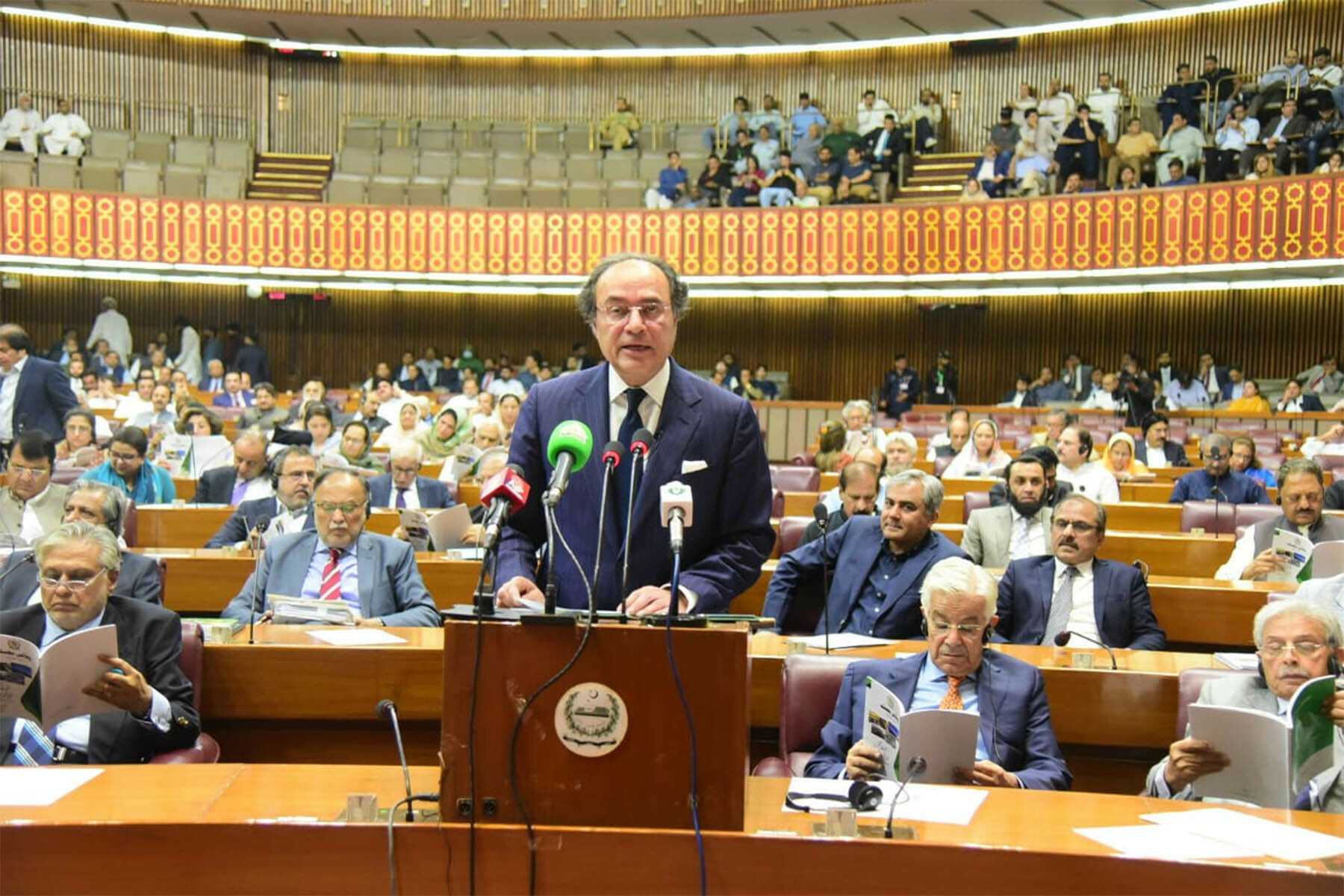
Islamabad: Finance Minister Senator Muhammad Aurangzeb on Friday 12th June 2026 Presented Pakistan’s Federal Budget for FY 2027 in National Assembly. Total Outlay of the Budget is Rupees 18.77 Trillion with proposed deficit of around 7.02 trillion. Government raised the FBR’s Tax Collection Target 15.26 trillion while Non Tax Revenue is estimated around 5.15 trillion rupees.
On Expenditure side, The FY2026-27 budget demonstrates that Pakistan’s fiscal space remains heavily constrained by debt servicing, which consumes nearly half of federal expenditures. While defence spending has been proposed to be increased to rupees 3 trillion, allocations for development remain comparatively modest amounting merely 1 trillion rupees. Rs. 1.06 trillion has been set aside for Pension Payments, while Rs. 1.16 trillion has been allocated for subsidies.
Category
Allocation (Rs Trillion)
Share of Budget
Debt Servicing (Interest Payments)
8.21
~44%
Defence Affairs & Services
3.00
~16%
Pension Payments
1.06
~6%
Federal Public Sector Development Programme (PSDP)
1.00
~5%
Grants & Transfers to Provinces and Others
1.93
~10%
Running of Civil Government
0.97
~5%
Subsidies
1.19
~6%
Emergency & Contingency Provisions
0.39
~2%
Other Expenditures
1.02
~6%
Since an amount of rupees 1 trillion has been allocated for Federal PSDP, where according to planning and finance ministry total cost of ongoing and approved federal development projects require several trillion rupees of budget allocations. Pakistan requires major investment in Ports and logistics, National highways and motorways, Railways modernization, electricity distribution, hydro power generation and Urban mass transit systems, however, such a low allocation for development budget undermines development activities in progress.
According to government reports and policy discussions over recent years, a number of Pakistan’s major State Owned Enterprises have accumulated losses worth hundreds of billions of rupees annually, while their combined liabilities run into several trillion rupees. Some of the most frequently cited enterprises include: Pakistan Steel Mills, Pakistan Railways, Distribution companies (DISCOs) in the power sector. Many of these organizations face issues such as Operational inefficiencies, Overstaffing, Political interference, corruption, Weak governance, Low productivity and Delayed reforms. A significant portion of government subsidies is linked to keeping public-sector entities operational, particularly in the energy sector.
On Defence spending, although there is significant increase of 18% in country’s defence budget, Pakistan’s increased defence allocation must be viewed within the context of its strategic security environment. As a nuclear-armed state sharing a long and often tense border with India, Pakistan continues to prioritize military preparedness and deterrence capabilities. Periodic military confrontations, unresolved disputes such as Kashmir, and broader regional security challenges reinforce the government’s argument that substantial defence spending remains a national necessity. Consequently, increased defence spending is necessary due to changing security and geopolitical environment.
About the Author
Administrator
The author is a seasoned banking professional with more than two decades of hands-on experience in the financial services industry. Having worked across diverse banking functions, the author offers a well-grounded perspective on economic trends, financial markets, and regulatory developments.